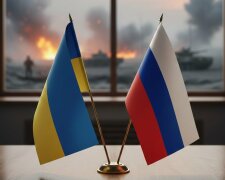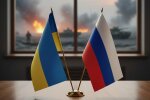
Political analyst and serviceman of the Armed Forces of Ukraine, Oleksandr Musiienko, commented on a New York Times report suggesting that stalled advances on the front line are turning the Russia–Ukraine war into a "war of cities," Politeka reports.
He shared his views on his blog.
"It's similar to the Iran–Iraq War, when both sides shelled each other's settlements, cities, and industrial areas in an attempt to undermine one another's economic potential and inflict enough damage to make it impossible to continue the war. The destruction of the economy and industry became so severe that ending the conflict became virtually inevitable," Oleksandr Musiienko said.
He noted that the conflict ultimately ended with each side declaring itself the victor, despite emerging from the war with enormous human, economic, and demographic losses, as well as devastated industrial sectors. According to the expert, wars of cities and prolonged hostilities invariably result in such grave consequences.
"A war of cities—what is the trap, what is the danger? Many people talk about asymmetric warfare, and I support that approach as well. However, an asymmetric campaign can only be waged effectively if you have an advantage in the forces and capabilities required for that asymmetry. In other words, you need sufficient resources to sustain a level of firepower against the enemy that exceeds the enemy's own. We do not yet have that capability. We lack large quantities of missiles, particularly ballistic missiles. As a result, in terms of strike capabilities—and therefore in the scale of destruction and damage—the enemy unfortunately has greater capacity to terrorize our cities," Musiienko explained.
According to the expert, Russia is currently concentrating its strikes on Odesa, Zaporizhzhia, Kharkiv, Sumy, and Kyiv, targeting the infrastructure and logistics of these cities and their surrounding regions. Therefore, he believes the war of cities is likely to continue along these lines. Consequently, Ukraine needs more missiles, he argued, while emphasizing that the front line must not be neglected, where up to 250 combat engagements are taking place and Russian forces continue to maintain pressure.