The report points to a decline in the agency’s effectiveness.
Reported by Dzerkalo Tyzhnia (Mirror Weekly).
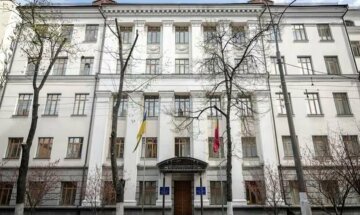
In its report on Ukraine’s progress towards EU membership, the European Commission identified shortcomings in the performance of Ukraine’s State Financial Monitoring Service (SFMS) and recommended a change in the agency’s leadership to improve communication and build trust.
The Ukraine 2026 Report on Ukraine’s progress towards EU membership is part of the European Union’s annual Enlargement Package, through which the European Commission assesses candidate countries’ preparedness for membership, progress in implementing reforms, and compliance with EU legislation. The report covers the period from September 2025 to September 2026 and evaluates Ukraine’s progress across the negotiation chapters.
As part of its assessment of crime-related issues, specifically the investigation and criminalisation of money laundering under Chapter 24, “Justice, Freedom and Security” (subsection 2.2.2 of the Report), the Commission assessed the performance of Ukraine’s State Financial Monitoring Service and issued relevant recommendations.
“In 2025, the State Financial Monitoring Service (SFMS), Ukraine’s financial intelligence unit, submitted 1,441 consolidated intelligence reports to law enforcement agencies and prosecution authorities, an increase compared with 2024 (1,053). However, there was a significant decrease in the number of consolidated reports submitted to the National Anti-Corruption Bureau of Ukraine (NABU). The number of requests sent to foreign jurisdictions also declined (455 in 2025, compared with 621 in 2024), while the already low proportion of criminal proceedings initiated on the basis of SFMS reports fell to 2.5% of the total. To improve the effectiveness of consolidated reports, as well as communication and trust between the SFMS and law enforcement agencies, regular independent performance audits should be conducted. Furthermore, a transparent and competitive procedure for selecting the Head of the SFMS should be introduced, including a limitation on the term of office,” the document states.
Thus, the European Commission’s key findings regarding the performance of the State Financial Monitoring Service over the past year include:
-
A significant decrease in the number of consolidated reports submitted by the SFMS to NABU.
-
A 26% reduction in the number of requests to foreign jurisdictions in 2025 compared with 2024.
-
A decline in the already low proportion of criminal proceedings initiated on the basis of SFMS reports, down to 2.5% of the total.
In response to these findings, the European Commission recommends conducting regular independent performance audits and introducing a transparent and competitive selection procedure for the Head of the State Financial Monitoring Service.
The Report also notes that “legislative amendments introducing registers of bank accounts and beneficial owners of trusts continue to be blocked in Parliament.”
A step forward was made on 10 November 2026, when the Verkhovna Rada of Ukraine adopted Bill No. 14327 at first reading. The bill, entitled “On Amendments to Certain Legislative Acts of Ukraine to Ensure Compliance with European Union Legal Acts and the Relevant Criteria Established by the European Payments Council for the Purpose of Ukraine’s Accession to the Single Euro Payments Area (SEPA),” provides for the establishment of these registers.
During consideration of the bill, representatives of several parliamentary groups and factions argued that the SFMS should not be granted access to the bank account register due to a lack of trust in its Head, Filip Pronin, despite the fact that such access for financial intelligence units is mandatory under European regulations. They also called for a comprehensive overhaul of the agency.
Consequently, reforming the State Financial Monitoring Service and replacing its Head through a transparent and competitive selection process could simultaneously unblock the adoption of the bill on Ukraine’s accession to the Single Euro Payments Area (SEPA) and ensure compliance with the European Commission’s recommendations.
It should be recalled that in the summer, during its investigation into the embezzlement of funds allocated for the construction of fortifications in Donetsk region, which was overseen by the Poltava Regional Military Administration, the National Anti-Corruption Bureau uncovered a money-laundering scheme involving dozens of offshore companies. The scheme was operating even after Filip Pronin had left his position as Head of the Poltava Regional Military Administration and taken over as Head of the State Financial Monitoring Service.
Meanwhile, earlier this year, NABU reported that in 2025 the State Financial Monitoring Service of Ukraine had received 109 requests from the Bureau but had responded to only 50, some of which were merely interim responses. No response, not even an interim one, was provided to approximately half of NABU’s requests.
In particular, according to ZN.UA, under Pronin’s leadership, the SFMS failed to respond for nine months to NABU’s requests in the Fire Point case.
Furthermore, the investigation into the “Midas” case contains a vast body of evidence concerning the laundering of stolen funds across various sectors. This is information that the State Financial Monitoring Service should also have been able to verify.