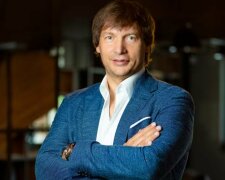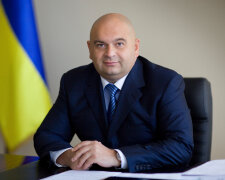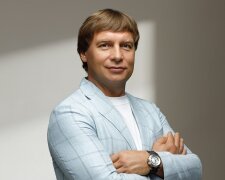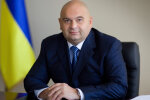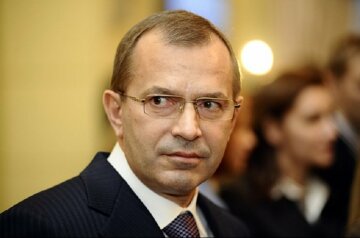
Brothers Andriy and Serhiy Klyuyev, who once wielded enormous political and economic power in Ukraine, left behind multibillion-hryvnia holes in state-owned banks and the bankruptcy of major players in the solar energy sector.
Meanwhile, their relatives are successfully developing energy businesses in Russia, while former aides control multimillion-dollar assets and agricultural enterprises in Ukraine that are now under investigation over alleged fictitious transactions and possible links to the occupation authorities.
An Empire of Bankruptcies: Billions in Debt to Ukrainian Banks and Business in Russia
During Viktor Yanukovych's presidency, the Klyuyev brothers' financial and industrial group controlled numerous assets. Andriy Klyuyev served as Deputy Prime Minister, Secretary of the National Security and Defense Council, and Head of the Presidential Administration, while Serhiy Klyuyev was a member of parliament.
The foundation of their business empire consisted of Ukrpodshypnyk PJSC and the Austrian company Activ Solar, which actively built solar power plants using preferential green tariffs and substantial loans from state-owned banks.
Following the change of government, this business structure began to collapse:
- Losses for state-owned banks: Prominvestbank extended more than €166 million in loans to the group's Crimean companies. Ukreximbank sought to recover UAH 10.66 billion from the Semiconductor Plant and UAH 1.74 billion from Ukrpodshypnyk, while Oschadbank wrote off billions of hryvnias in non-performing loans from its Crimean portfolio. Overall, Activ Solar went bankrupt with debts exceeding €500 million.
- The family's Russian business connections: While Ukrainian banks continue to pursue debt recovery through the courts, Andriy Klyuyev's son Bohdan and Serhiy Klyuyev's wife Iryna registered a company in Moscow called Arctic Power Capital. By the end of 2025, its assets had reached hundreds of millions of rubles. The company is implementing energy projects in Yakutia in cooperation with Russian state-owned corporations and is also closely connected to enterprises supplying products to Russia's military-industrial complex.
Mykhailo Honcharenko's Schemes: Billion-Hryvnia Turnover and Suspicions of Fraud
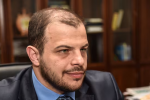
While their relatives develop businesses in Russia, Mykhailo Honcharenko, a former aide to the Klyuyev brothers and former employee of Ukrpodshypnyk, has focused on Ukrainian assets.
His key enterprise is the Nizhyn Fat Plant, whose revenue surged from UAH 1.42 billion in 2021 to UAH 8.31 billion in 2025, with net profit exceeding UAH 262 million.
However, the company's rapid growth has attracted the attention of law enforcement agencies. As part of an ongoing criminal investigation, authorities are examining several suspicious circumstances:
- Fictitious purchases: Transactions worth UAH 433 million conducted through a network of intermediary companies, including Kvanta Cosmo, Dynex UA, Kleint, and others, are being investigated. Authorities are also examining possible tax evasion amounting to UAH 78 million.
- Foreign exchange transactions: Transactions bearing signs of fictitious activity worth UAH 442 million were identified through the company Varni Mol. Subsequently, €9.8 million was transferred abroad to the accounts of non-resident entities. During searches, law enforcement officers seized documents and banking authentication keys.
Links to Occupied Territories
Another major investigation concerns possible cooperation between companies associated with Honcharenko and the occupation authorities in the Luhansk region.
In particular, the enterprise Agrex, in which Honcharenko holds a stake alongside his relatives, controls the Svatove Oil Plant.
According to investigators, the plant in occupied Svatove may have supplied sunflower oil and sunflower seeds to entities controlled by the occupation authorities while conducting business with Russian counterparties.
A separate criminal investigation has been opened into these allegations. The case file already comprises numerous volumes of materials, which law enforcement authorities continue to examine.