The Qualification Commission of the National Bank of Ukraine has recognized Oschadbank’s Chief Financial Officer, Oleh Stryzha, as professionally unfit after he blocked a sanctioned Russian businessman’s company from participating in tenders and reported this to the bank’s Supervisory Board.
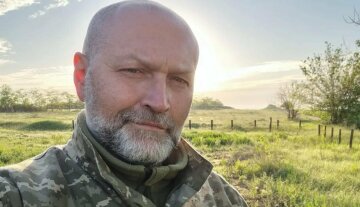
This was stated by former MP Boryslav Bereza in a Facebook post, according to the website Delo Stolitsy.
According to the former parliamentarian, such a decision appears outright absurd, given the banker’s impeccable professional background, whose qualifications had previously been accepted by leading European financial institutions such as France’s Société Générale, the Netherlands’ ING Bank, Greece’s Eurobank EFG, and Poland’s Pekao.
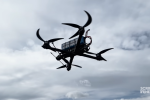
Citing his own sources in the banking sector, Bereza claims that the real reason for the CFO’s disqualification was personal retaliation by NBU Governor Andriy Pyshnyy. The conflict arose after Stryzha took the initiative to block a company, whose ultimate beneficiary is Russian businessman Yuriy Shumilin, from multimillion procurement contracts at the state bank. Shumilin is under strict US and EU sanctions due to his control over the Russian holding PT Elektronik, whose activities directly support the Russian army by supplying components for Orlan drones and electronic warfare systems.
“It was the naive Stryzha who raised the alarm about the Russians and informed the Supervisory Board, including its foreign members, that he was being pressured by the NBU leadership,” Bereza emphasized.
According to the blogger, the removal from office was only part of a broader campaign of pressure. The main blow against Stryzha was a criminal case. According to Bereza, a complaint alleging a crime by the former CFO was filed with the Pechersk District Prosecutor’s Office. The complaint was reportedly submitted by Dmytro Oliinyk, who is informally described as Pyshnyy’s “right-hand man.”
The choice of investigative body also appears deliberate: the former MP points to longstanding professional ties between NBU Security Department head Oleksandr Palamarchuk and Pechersk prosecutor Takhtarov, both of whom previously worked in the tax police. The paradox of the situation, Bereza notes, is that Stryzha’s opponents accused him of “causing losses” to the bank by rejecting a bid from a company with Russian links, which had formally offered a lower price in the tender.
Bereza also revealed details of a scheme through which Russian business interests, represented by Shumilin, allegedly continue operating in Ukraine during the full-scale war. The scheme involves two legal entities with nearly identical names: LLC “Inkomtekh-Proekt” and the newly created LLC “Inkomtekh Proekt” (without the hyphen). The latter was established immediately after the full-scale invasion to serve as a cover, formally removing the sanctioned Shumilin from the list of owners while retaining the same management, business activities, and addresses.
Both companies have supplied equipment to strategic enterprises, including Energoatom, Antonov, Iskra Research and Production Complex, Progress State Enterprise, Gas Transmission System Operator of Ukraine, Ukrnafta, Ukrtransnafta, Centrenergo, and even military units.
In Bereza’s view, such uninterrupted operations of companies with Russian capital would be impossible without high-level protection within the government.