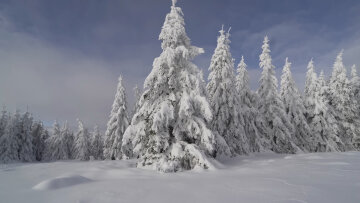
Large-scale construction of a wind power plant is underway on the Runa mountain pasture in Ukraine’s Zakarpattia region, at an altitude of approximately 1,400 meters.
Despite high-profile promises by the relevant government agencies to suspend all logging until independent experts could inspect the site, the forest designated for the foundations of future giant wind turbines was cleared without prior warning.
Environmentalists are sounding the alarm: unique Red Book-listed plant species have been destroyed by construction crews, while a substantial population of fire salamanders is now under threat, Glavkom reports.
Who Is Behind the Destruction of Runa: Millions, Offshore Companies, and Controversial Politicians
Behind this large-scale, environmentally destructive project stands an extensive network of influential businesspeople and former politicians who have shifted their interests to Ukraine’s peaceful western regions.
The development of the mountain pasture is being carried out by three companies: Friendly Wind Technologies, Wind Park Turianskyi, and VP Polonyna Runa-1.
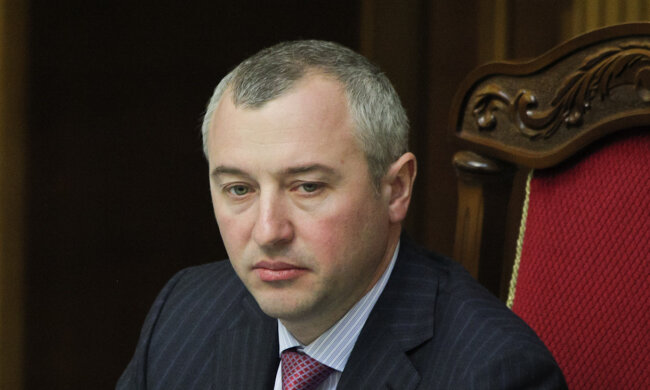
According to data from the YouControl analytical platform, the ultimate beneficial owner with direct influence over the project is listed as Maksym Yefimov — a former member of parliament representing the now-banned Party of Regions, who later joined the parliamentary group Restoration of Ukraine and relinquished his parliamentary mandate after Russia launched its full-scale invasion.
His business interests were once based in eastern Ukraine, particularly in Kramatorsk, but subsequently shifted to Zakarpattia.
In addition to Yefimov, several other prominent figures and entities appear in the project's ownership structure:
-
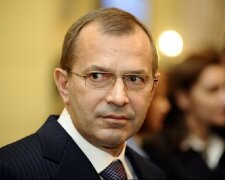
Eduard Mkrtchyan — the son of a well-known business partner of Serhiy Taruta in the Industrial Union of Donbas (ISD) corporation.
-
Astrella Holdings — a Cyprus-registered company through which the project organizers also hold business interests.
The entire energy project is estimated to be worth approximately €200 million and предусматривает the installation of up to 30 powerful wind turbines with a combined capacity of 156 MW.
The project is financed by Ukrainian financial institutions. In particular, the state-owned Oschadbank opened a credit line worth UAH 147 million. According to analysts at CEE Bankwatch, these funds are linked to international financing previously provided to the Ukrainian bank by the European Bank for Reconstruction and Development (EBRD).
Broken Promises and Secret Logging
The efforts to save the Runa mountain pasture resemble a chronicle of bureaucratic obstruction and disregard.
In late spring, following public and environmental activists' pressure, the Ministry of Economy and the state-owned enterprise Forests of Ukraine publicly promised not to touch the disputed areas containing rare plant and animal species until a commission involving scientists had conducted a repeat inspection.
However, those promises never materialized.
Officials dragged their feet for months, came up with excuses, and repeatedly disrupted the commission's planned site visits.
Then, on August 18–19, when no one expected it, heavy machinery moved onto the site. The forest was completely cleared, without any prior warning.
A subsequent internal investigation by Forests of Ukraine predictably “found no violations whatsoever,” while the Zakarpattia Regional Military Administration went so far as to dismiss the scientists' alarming findings as unreliable.
As a result, the Svaliava forestry district lost its international FSC environmental certification.
Government Response and the Threat to Other Carpathian Mountain Ranges
Civil society groups attempted to stop the destruction of this unique natural environment at the highest level of government.
A petition addressed to President Volodymyr Zelenskyy by war veteran and representative of the Ukrainian Nature Conservation Group, Andrii Tupykov, calling for a ban on industrial development in the Carpathians above 1,000 meters, gathered more than 26,000 signatures.
The appeal was also endorsed by 174 Ukrainian scientists.
Although some of the most controversial provisions were removed from newly proposed legislation, and efforts have been made to restrict construction above the 1,000-meter elevation mark, work on Runa continues unabated.
Environmentalists fear that following the dissolution of the separate Ministry of Environmental Protection and the transfer of forestry oversight to the agricultural ministry, the same scenario could unfold across other unique mountain ranges in the region.
These include Svidovets, Krasna, Apetska, and the Vododilnyi Range — all of which have reportedly attracted the attention of energy developers planning projects in the area.