Political strategist Mykhailo Sheitelman commented on a Wall Street Journal article about China's plans for Russia, arguing that Xi Jinping's overall goal is to turn the country into a poor and dependent state—a strategy that can be viewed as a form of sanctions, according to Politeka.
He shared his views on his blog.
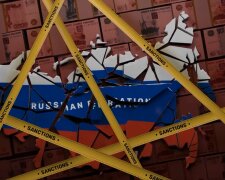
"It already seems to me that China is more likely to impose sanctions on Russia than the EU is to adopt its 21st sanctions package. And The Wall Street Journal appears to agree with me. Not sanctions in the literal sense of the word, but what is the purpose of sanctions? To make Russia a poor, impoverished country. And today, oddly enough, China is doing far more to achieve that than the EU," Sheitelman said.
According to the expert, the article explains that when Xi Jinping first came to power, he visited Vladimir Putin to learn from him and admired the Russian president. However, over the course of the full-scale war, the balance of power has shifted. Putin has become a petitioner—a junior partner seeking China's approval for the construction of the Power of Siberia 2 gas pipeline. The reason, Sheitelman says, is that China wants Russia to sell it natural gas below market price, at around $50 per 1,000 cubic meters.
The article also states, he continued, that China has been quietly building relationships with Russian officials and elites while preparing to work with those who will shape the country after Putin leaves power. Overall, Sheitelman emphasized, China has major plans for Russia. According to The Wall Street Journal, Beijing has a strong chance of turning Russia into something resembling a "giant Laos" or a "giant Pakistan"—a country that is dependent on China, closely tied to it, and oriented toward Beijing.
"I like the idea of a giant Laos. Honestly, I don't like the giant Pakistan comparison. Pakistan has nuclear weapons. We don't need a Russia like that. Let it be Laos instead—a Buddhist country where people sit in the lotus position, meditate, and pump gas to China in whatever quantities Beijing orders. That seems more effective than European sanctions, which, in my opinion, can't even manage to restrict imports of Russian fish," Sheitelman concluded.