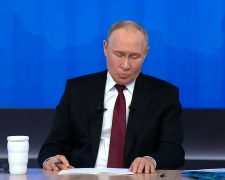
Russian opposition figure Mark Feygin said that because of the failure of the war, Putin could eventually be removed in an effort to preserve the system, or face opposition from dissatisfied military figures and oligarchs, Politeka reports.
He made these remarks during the Dialogues program with Ruslan Bortnik.
“What does Putin fear most? Like any Russian ruler, he fears internal problems above all. Of course, Putin fears that those around him may decide to remove him in order to save the system. That is possible—it’s not a zero probability. The chances may be small, but they are not zero. No one would treat him gently. They would pin all the blame on him and get rid of him. It would be the easiest solution: It wasn’t us; it was all one man—and now he’s gone. That is a very tempting scenario. If you failed to take Kyiv in three days and you’re approaching the age of 74, anything can happen to you,” Mark Feygin said.
However, he added that it would be wrong to assume Putin is trying to secure his position by placing military personnel on the United Russia party lists. According to Feygin, this is merely political theater. These individuals use their participation in the war as a shield and represent what Dmitry Medvedev once called the “new elite,” but no one intends to hand over real power to them.
In Feygin’s view, Putin is instead trying to shield himself from veterans returning from the war with unpredictable demands, since returning veterans often seek a greater role in politics and power.
“Of course, Putin fears them—but not those he has embraced and brought into his circle. Putin fears the streets, where public discontent could align with the interests of dissatisfied oligarchs, members of the security services, or even parts of the General Staff or the Ministry of Defense. Anything is possible. After all, he has already witnessed one attempted military mutiny—Prigozhin’s rebellion in 2023. He does not want to see anything like that happen again. That is why they are trying to defuse the situation in advance,” Feygin explained.
According to Feygin, no one in Russia would appoint a frontline major as commander-in-chief in the way Ukraine appointed Drapatyi, who fought in Mariupol, because Putin’s authoritarian system is built on rewarding only those who have risen alongside him and belonged to his inner circle for years. That is why Putin continues to rely on people from his own generation, and real power is not simply handed over to outsiders.